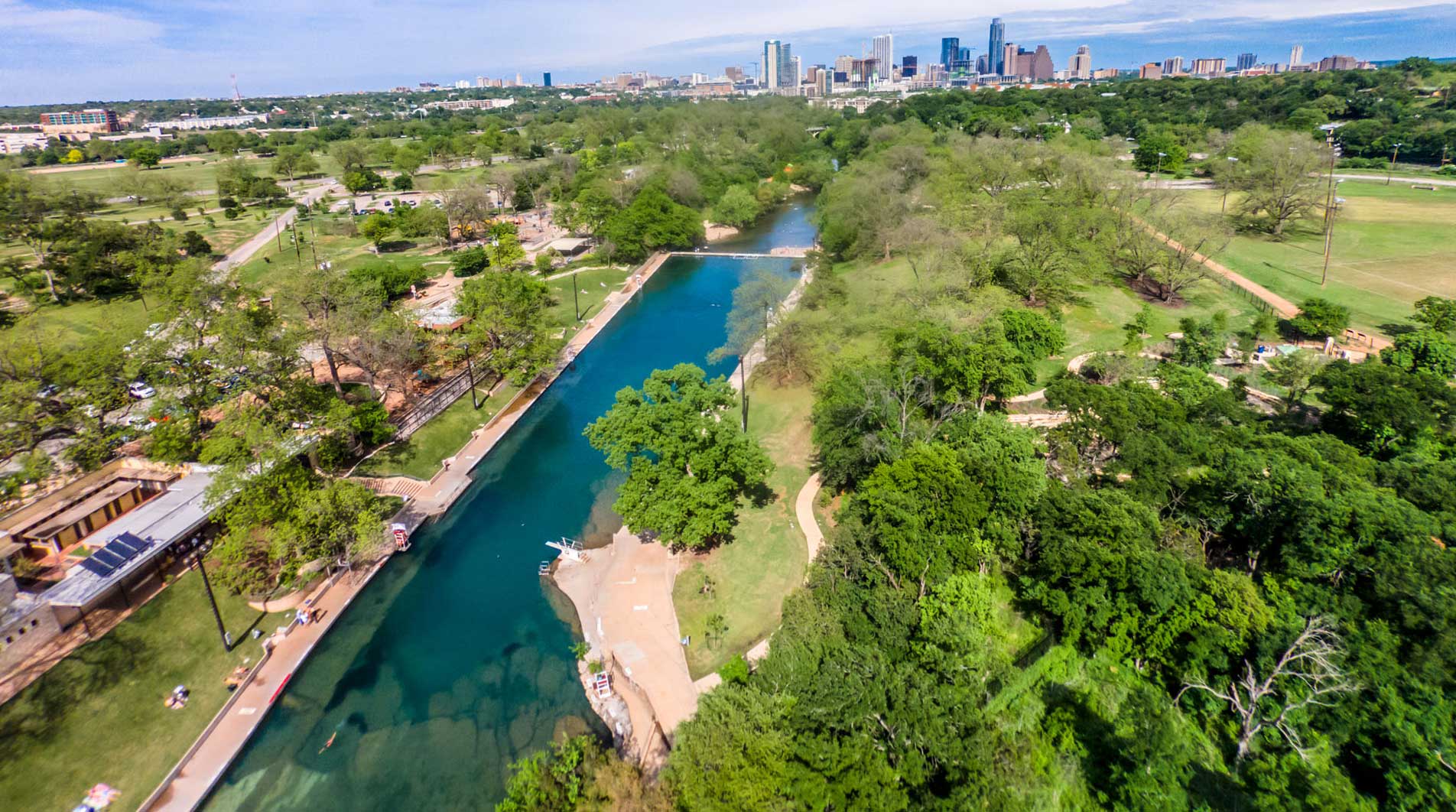
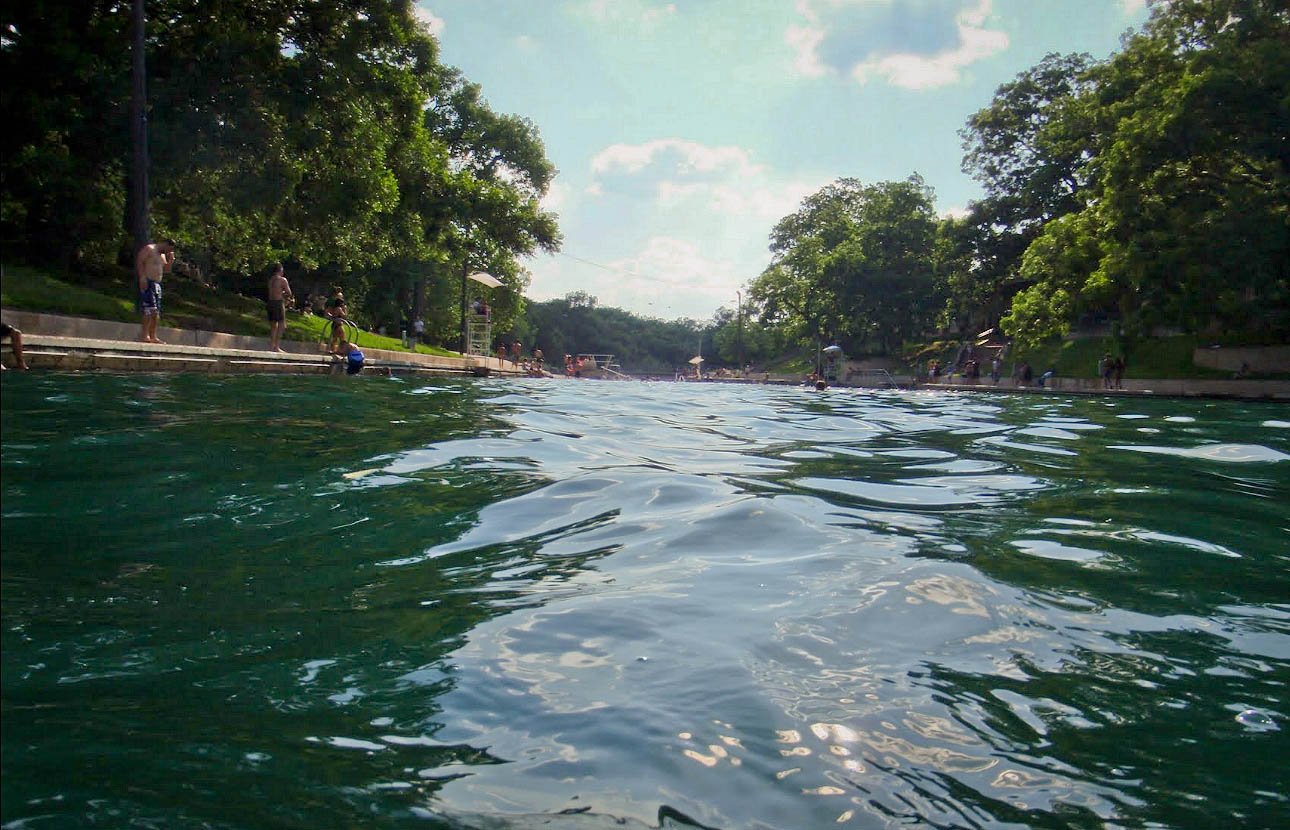
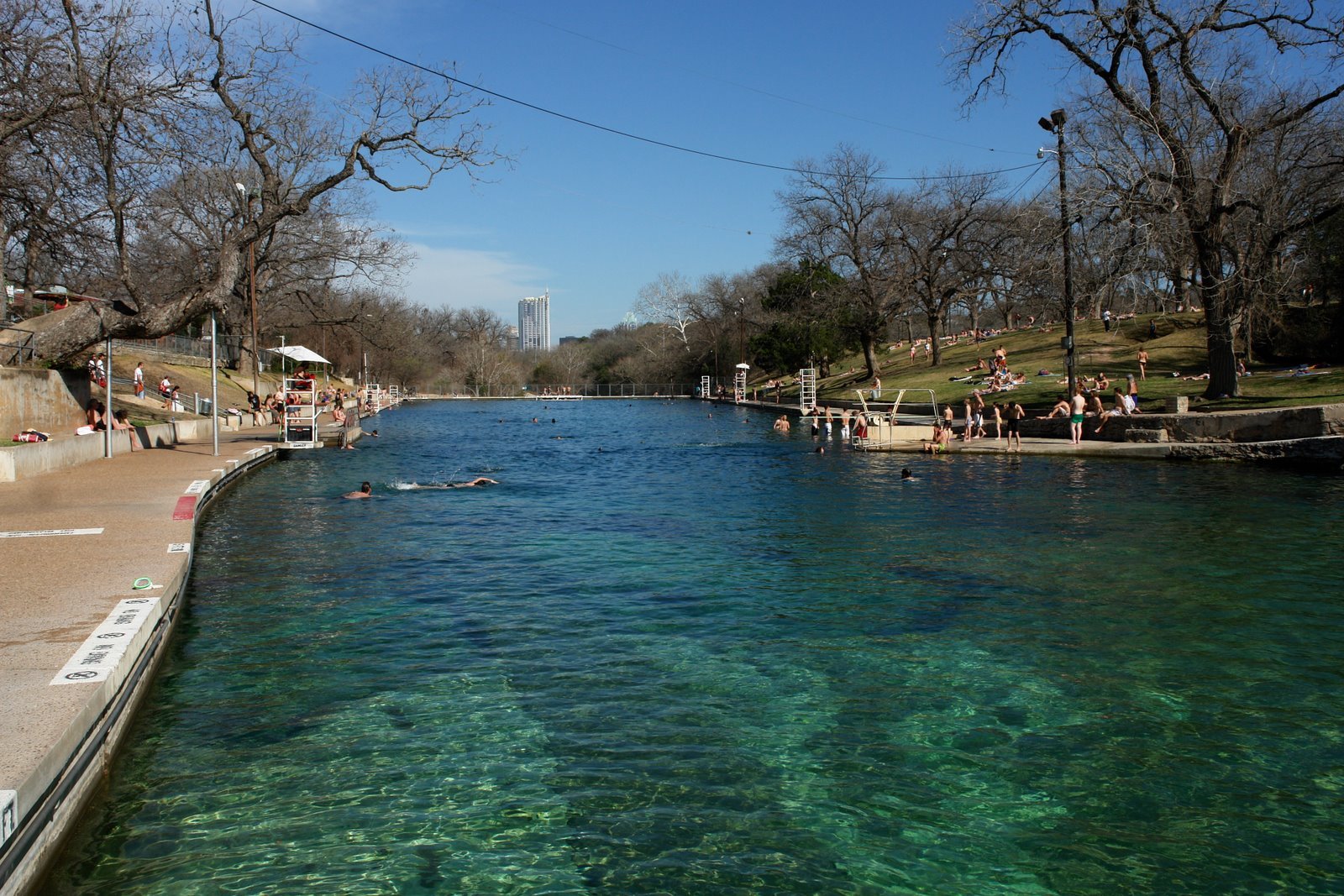
 Barton Springs Pool is a true Texas treasure, when it comes to natural spring fed swimming holes and gorgeous settings. The man-made recreational swimming pool is located on the grounds of Zilker Park in Austin, Texas. The pool exists in the channel of Barton Creek, and is filled by water from Main Barton Spring, the fourth largest spring in Texas. The pool is a popular venue for year-round swimming, as its temperature maintains a narrow range from about 68 °F (20 °C) in the winter to about 71.6 °F (22.0 °C) in the summer.
 Long before Barton Springs Pool was built, the springs were considered sacred and were used for purification rituals by the Tonkawa Native American tribe who inhabited the area. Spanish explorers first discovered the springs in the 17th century, and around 1730 erected temporary missions at the site (later moving to San Antonio).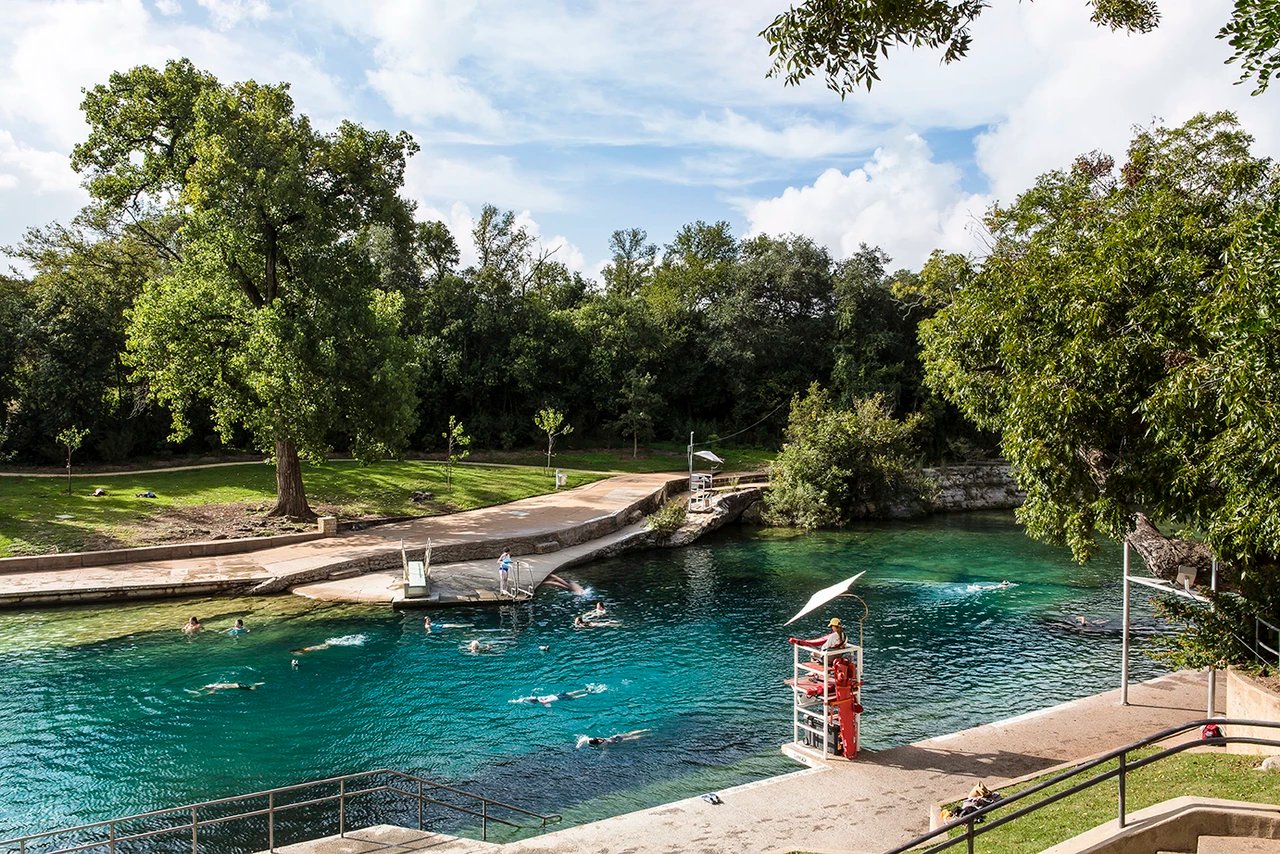
In 1837, soon after incorporation of the city of Austin, William (“Uncle Billy”) Barton, the springs’ namesake, settled the area. Barton named the three separate springs after his three daughters: Parthenia, Eliza, and Zenobia. He, and subsequent owners of the property, recognized its value as a tourist attraction, and promoted it vigorously, thus leading to the swimming hole’s lasting popularity.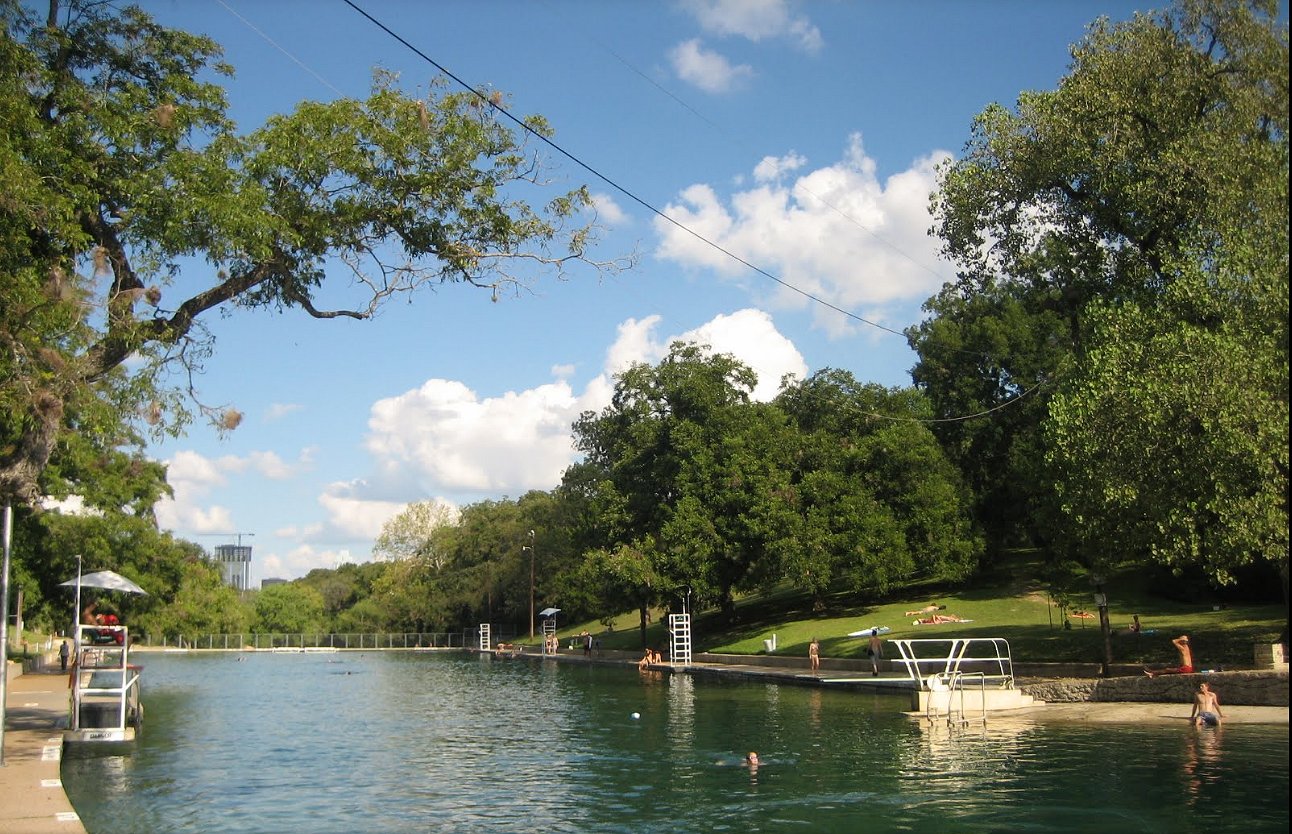 The last private owner of the property, Andrew Jackson Zilker, deeded it to Austin in 1918. During the 1920s, the city undertook a construction project to create a larger swimming area by damming the springs and building sidewalks. The bathhouse was constructed in the 1940s and modeled after the design of the bathhouse at Deep Eddy Pool.
The current admission fee for Austin residents is; $3 for adults, $2 for ages 12–17, $1 for ages 1–11, and 62+, and infants younger than 1 year are free. Non-residents pay $1 more. Season passes are available for $180, and punch-cards allowing for $40 worth of pool entry are available for $34.