Having pioneered many of the green technology features found in today's new homes with my luxury home building company, Bryan Smith Homes, founded in 1977, I tried a lot of new products and energy saving approaches long before building green became a real focal point. Because of all the large homes we built, and the subdivisions my company developed were tied to the grid, I never built an off-grid home before, or one with a solar system included. When I launched Texas Tiny Homes in December of 2012, I began to realize many of our plan customers around the world were planning to build off grid, so decided to educate solar and wind generated power.
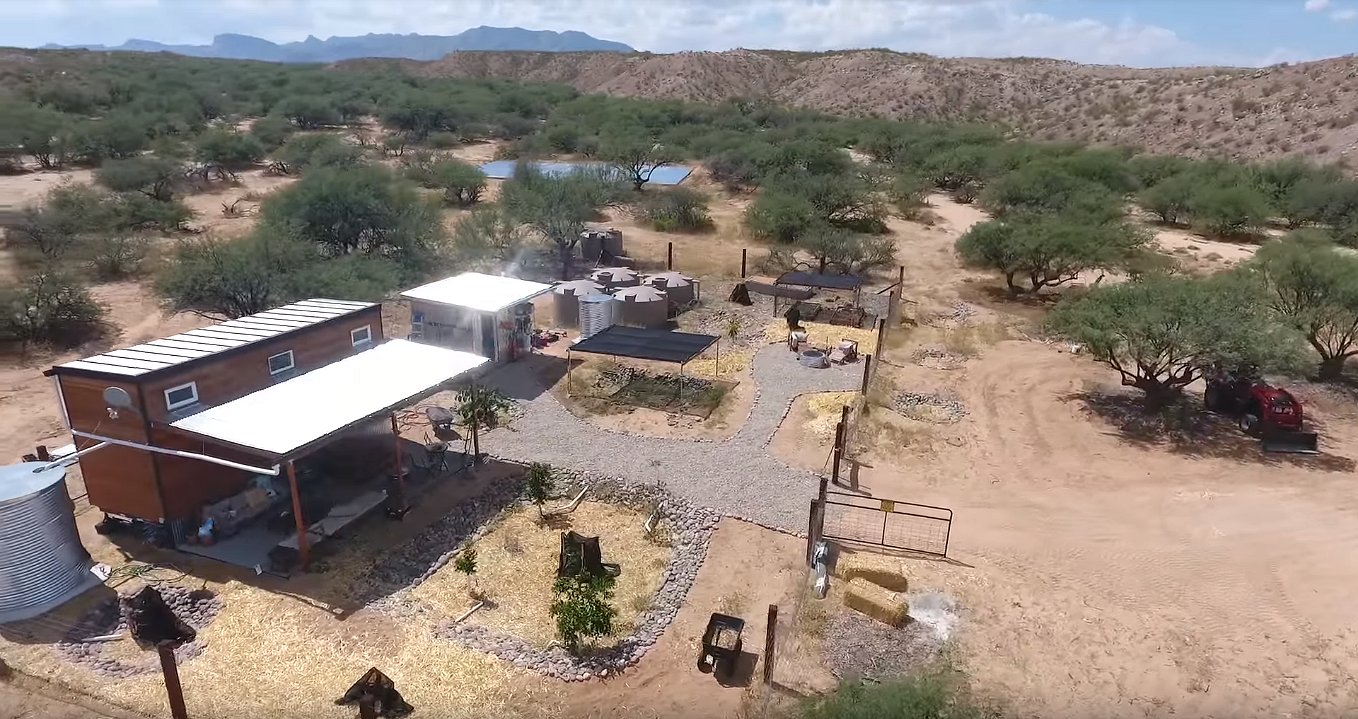
One of the first questions I had was; can an off-grid solar system handle an air-conditioning system? That is also one of the first things people in Texas and most southern states want to know as they consider an off grid lifestyle in a tiny house, or small home. This video, by DIY Homesteading provides some helpful information and his personal testimony on their own tiny RV home they just constructed in Arizona. Heating a tiny, or a small off-grid home doesn't require solar, so that's not the problem. You can go with a wood burning iron stove or some of the popular tiny home propane heaters work well. You can also go with a heat pump system as discussed below.
The good news is; it IS possible to have air-condition system with a reasonable size and priced solar system, but you have to plan wisely when designing and building the home; including minimizing your exposure to the west sun. How you situate your home on the property is an important part of the equation. If your home is going to be one on a trailer, or it's one of our tiny or small homes that are too wide for trailers, they are usually rectangular in shape. And because of that you will want to place the trailer, or build the home with the narrow ends facing east and west, therefore minimizing your exposure to the sun. It would be best if there were no windows on the end that catches the west sunset, but if you do have windows, you would want to go with super efficient units with triple pane glass that are argon filled. Making that exterior wall, 2" X 6" or 2" X 8" thick would also be an excellent idea. You will want to foam insulate that wall too, as well as all the exterior walls in the home as well as any ceilings that are also the roof rafters.
We plan to add 4' X 8' X 1" foam board sheathing on the exterior wall first before adding radiant barrier sheathing and then siding. Adding radiant barrier decking on the exterior walls before the siding goes on will reflect 97% of the radiant heat entering the home. The additional "R" value those items add to the exterior walls will help make the home even much easier to heat and cool, as well as maintain the temperature inside the home. Once the home is acclimatized to your desired temperature, it's much easier, and more economical to maintain that temperature with a super insulation design and installation as outlined above.
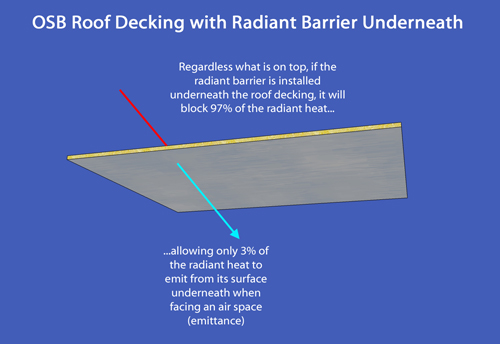 Another important step you will need to take in an effort to reduce the heat from the sunlight during the hot months is to use a radiant barrier roof decking before the the roof material is applied. That type of decking can reduce attic temperatures dramatically by reducing the radiant waves by 97%, and a cooler attic or roof keeps the inside of your home cooler. Using reflective, light colored roofing material is also an important part of the off-grid home when cooling it down. You would want to avoid a dark colored roof.
 Using this type of roof will reflect the sunlight rather than draw it into the home as popular, darker colored composition roofs will do, unless they have been manufactured with energy saving elements in the materials used. The good thing about a metal roof, manufactures apply paint to the metal that reflect infrared wavelengths, and you can actually receive a tax credit when installing energy saving roof materials.
Another requirement with having an air-conditioner in your off-grid home is installing a low-voltage, high-seer mini split-system, which is much more economical to operate and uses a lot less valuable wattage from the battery bank. Because of how the tiny or small home is designed and built that include all these energy saving features mentioned, it will be much easier on the solar system to keep the home cool and also warm if you use the heat pump in the mini-split system. Having large shade trees on the end of the home that faces west is also another great idea, as long as it doesn't interfere with the solar panels sun exposure.