Cob Construction

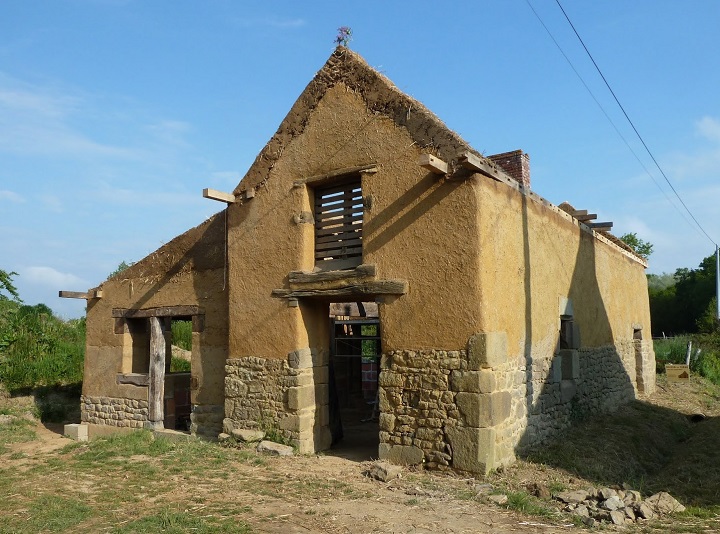
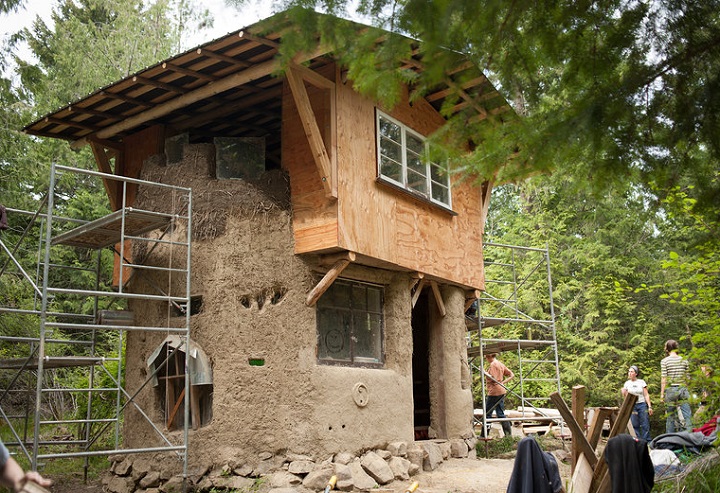
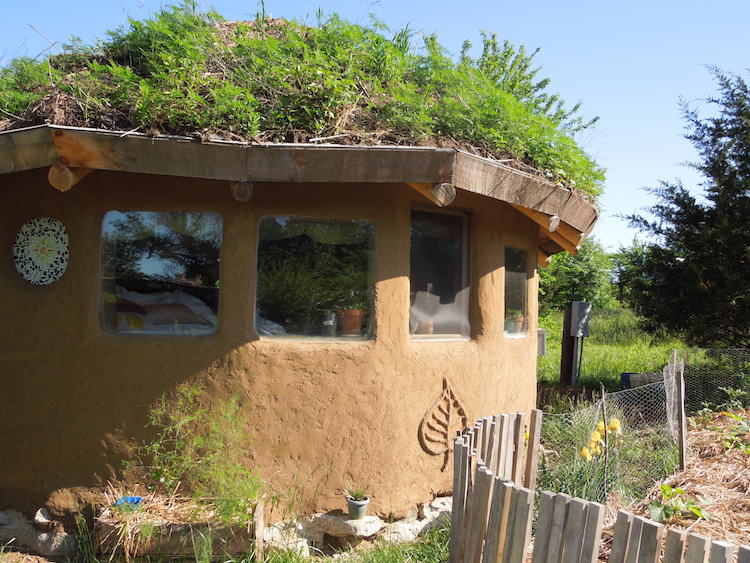
If you have a clay based subsoil (15-25% clay) you are in luck as your home’s raw material is below your feet. (You want the inorganic stuff down under the topsoil, no decomposing mulch and micro-organisms.) Mix your clay soil with some water, sand and straw. Mix with your feet, bare or booted, or with any number of mechanical mixers, or an oxen, or for a really large job, use a backhoe. See the ilovecob website for multiple mixing methods.

Cob Under Construction

Source: Cob Under Construction

Bark Shingles

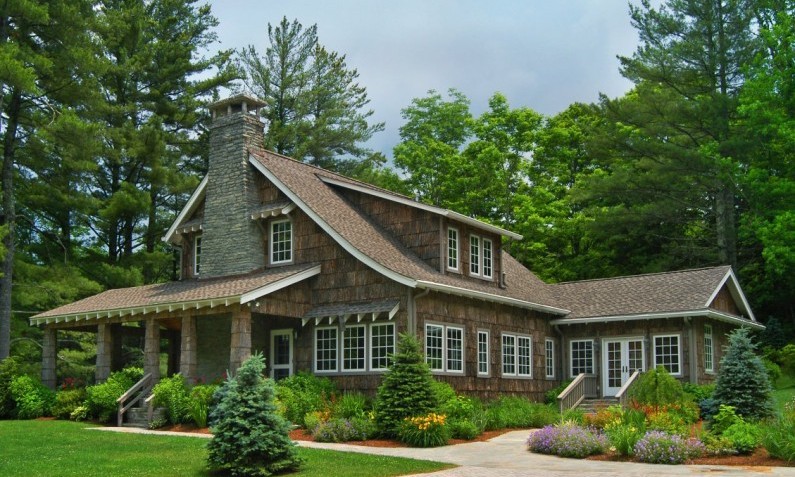
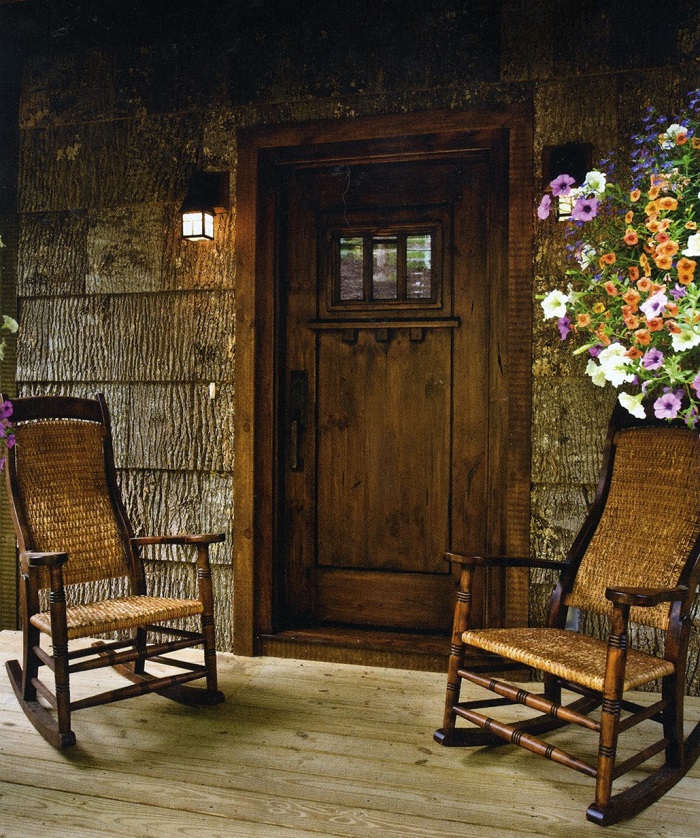
tumblr_lw3zi99A1Z1qeltl1o1_1280Bark Shingles was commonly used as home siding by the American Indians. Europeans arriving in America also found bark to be a useful siding. Chestnut siding was preferred until the chestnut blight killed the majority of chestnut trees. Now poplar bark is preferred. The bark is peeled from the felled tree and then flattened and kiln dried. The drying process kills all insects and makes the bark maintenance-free and impenetrable to future insect infestations. Bark siding has been known to last upwards of 80 years without need of sealant or stain. Poplar bark has an R-value of approx 3.7 and has excellent sound insulating qualities. Poplar wood is widely used in the furniture industry and utilizing the tree’s bark for siding means tree bark siding is a virtually zero waste product.

See much more about Bark: Bark Shingles


All About Green Roofs

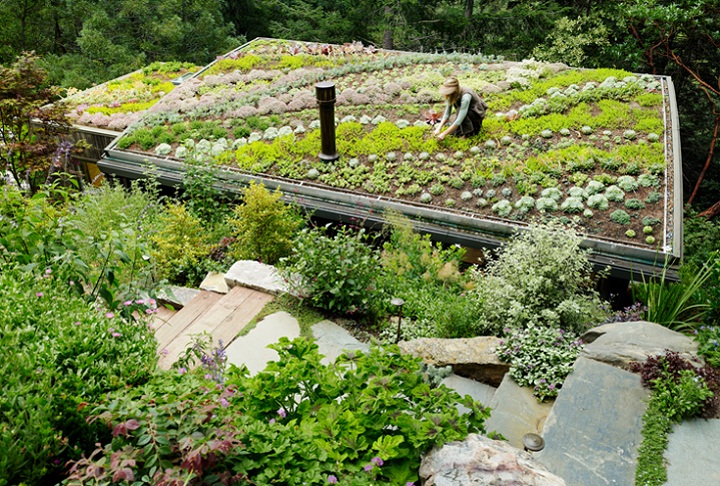
Green roofs, grass roofs, roofs with grass, roofs with plants, green roofing membranesGreen roof inspiration for homes, sheds and arbors
Green roofs, grass roofs, roofs with grass, roofs with plants, green roofing membranes

Green roofs, grass roofs, roofs with grass, roofs with plants, green roofing membranes

In Germany, it is estimated 12% of all flat-roofed buildings are living roofs, a number that is rapidly increasing as the German green roof industry continues to grow 10 to 15% per year.
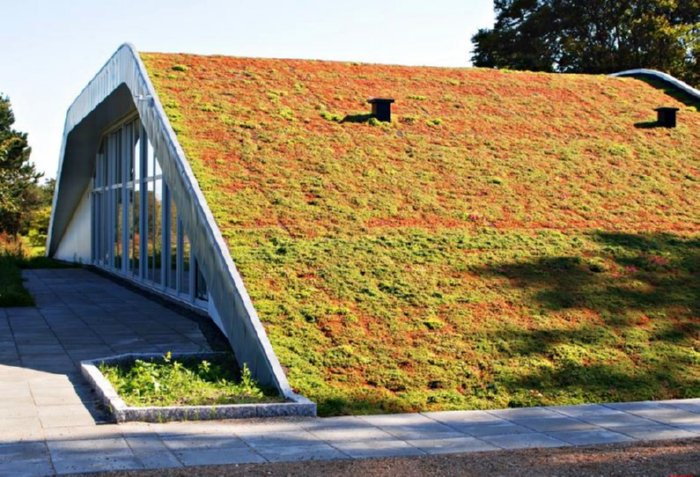
Green roofs, grass roofs, roofs with grass, roofs with plants, green roofing membranesThere are two main types of green roofs.

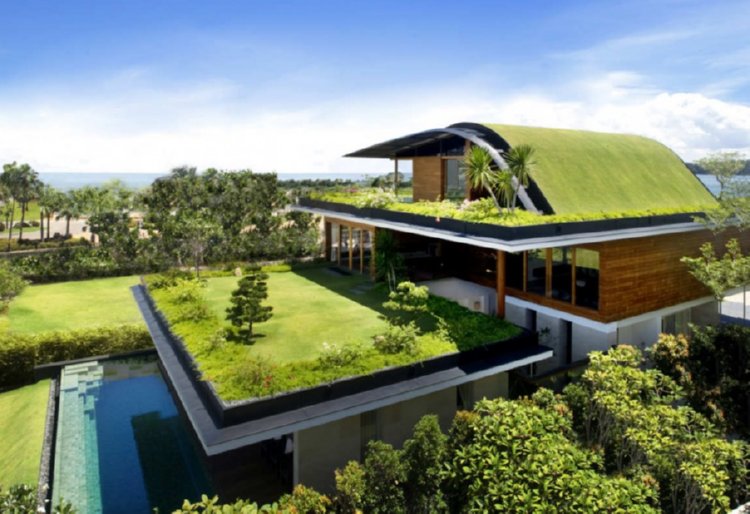
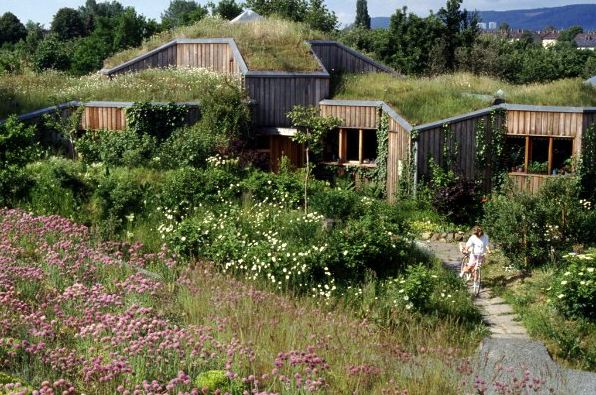
Intensive (labor-intensive) – Found on flat roofs and require about 4-24 inches of planting medium that is able to grow conventional lawns, vegetable gardens, small shrubs and even small trees. Intensive rooftops require sophisticated structural support and possibly irrigation. Typically weigh 80-120 lbs. per square foot, fully saturated. Are often park-like gardens for public or private use.
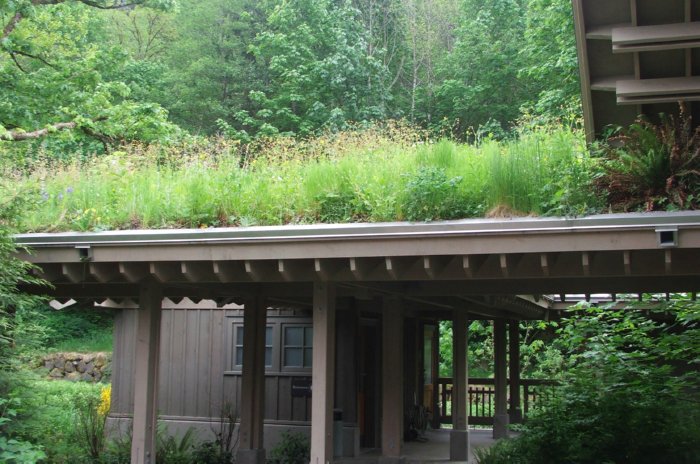
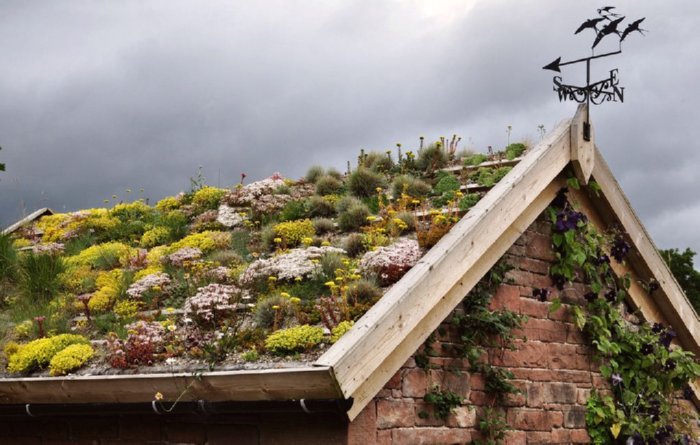
Green roofs, grass roofs, roofs with grass, roofs with plants, green roofing membranesExtensive (sedum or grass) – Designed to be virtually self-sustaining and require low to no-maintenance. Needs a planting medium of 1-4 inches on a flat or gently sloping roof. Best with native vegetation or drought-resistant, cold-resistent, shallow-rooted plants, sedum, herbs, mosses or grass which generally grow no higher than several inches. They typically weigh 10-50 lbs. per square foot, fully saturated, depending on what type of growing medium is used.
Green roofs, grass roofs, roofs with grass, roofs with plants, green roofing membranesBenefits:

Green roofs are excellent insulators. Studies have shown that a green roof can reduce your cooling costs by 50% and more during the summer months and in the winter your home will retain 15-30% more heat than if you had a conventional roof. On a sunny, 80-degree-F day, a black roof can reach 180 degrees F; a white roof 120 degrees; and a plant-covered roof 85 degrees. Save money and use fewer energy resources.

Cost. There are many modular green roof kits available that might bring the costs down. Extensive green roof: $8 to $20 per square foot. Intensive green roof: $15 to $50 per square foot. A 2006 study by the University of Michigan comparing costs of conventional and green roofs showed that, on average, installing a green roof costs about $22.00/sq. ft. versus $16.00/sq. ft. for a conventional roof. In its life, however, it was estimated the green roof would save over $200,000 (in 2006 energy prices) with two-thirds of that coming from reduced energy needs.

Reduced storm water runoff. When the water falls on a typical roof, it’s often funneled off into storm water drains, collecting pollution along the way and polluting our waterways or increasing the amount of sewage to be treated. Green roofs ‘harvest’ rain water and put it to beneficial use.

Increased longevity of roofing membranes. The plants and growing medium are absorbing the solar rays, protecting the roofing materials from UV breakdown.The green roof also shields the membrane from extreme temperature variations, another cause of hastened degradation. According to Penn State research, a green roof will lengthen roof life by two to three times.*
Sound proofing. An extensive green roof can reduce sound from outside by 40 decibels, while an intensive roof can reduce sound by 46-50 decibels (Peck et al. 1999).

Aesthetic appeal. Nature relaxes, promoting psychological well-being.

Carbon is sequestered.  Through the process of photosynthesis, carbon dioxide is removed from the atmosphere and stored as carbon in biomass.

Urban Heat Island Effect – if an urban area has numerous green roofs, heat island effect is lowered.

Habitat. When planted with native vegetation – a green roof becomes a habitat for indigenous species and migrating butterflies, birds and bees.
Green roofs, grass roofs, roofs with grass, roofs with plants, green roofing membranesResources:

Green Roofs for Healthy Cities greenroofs.org
GreenRoofs.com greenroofs.com

See Lots More: Green Roofs


Tesla’s announcement: The coming revolution in energy storage – The Washington Post

Late Thursday, the glitzy electric car company Tesla Motors, run by billionaire Elon Musk, ceased to be just a car company. As was widely expected, Tesla announced that it is offering a home battery product, which people can use to store energy from their solar panels or to backstop their homes against blackouts, and also larger scale versions that could perform similar roles for companies or even parts of the grid.

For homeowners, the Tesla Powerwall will have a power capacity of either 10 kilowatt hours or 7 kilowatt hours, at a cost of either $ 3,500 or $ 3,000. The company says these are the costs for suppliers and don’t include the cost of installation and a power inverter, so customers could pay considerably more than that.

The battery, says Tesla, “increases the capacity for a household’s solar consumption, while also offering backup functionality during grid outages.” At the same time, the company said it will producing larger batteries for businesses and utility companies — listing “projects” with Texas-based Oncor and Southern California Edison.

The anticipation leading up to this announcement has been intense — words like “zeitgeist” are being used — which itself is one reason why the moment for “energy storage,” as energy wonks put it to describe batteries and other technologies that save energy for later use, may finally be arriving. Prices for batteries have already been dropping, but if Tesla adds a “coolness factor” to the equation, people might even be willing to stretch their finances to buy one.

[Powering your home with batteries is going to get cheaper and cheaper]

The truth, though, is Tesla isn’t the only company in the battery game, and whatever happens with Tesla, this market is expected to grow. A study by GTM Research and the Energy Storage Association earlier this year found that while storage remains relatively niche — the market was sized at just $128 million in 2014 — it also grew 40 percent last year, and three times as many installations are expected this year.

By 2019, GTM Research forecasts, the overall market will have reached a size of $ 1.5 billion.

Source: Why Tesla’s announcement is such a big deal: The coming revolution in energy storage – The Washington Post


The Hermitage – Tiny House Blog

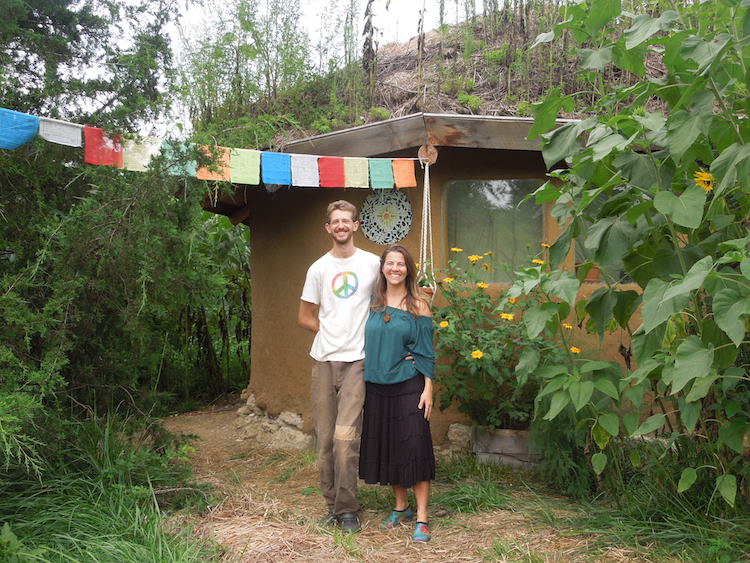
Hassan Hall, natural builder and self-styled woodsmith, combines permaculture principles with an ancient, artisanal approach in his ecologically sustainable homestead: the Hermitage.

Tucked away on the wild margins of Dancing Rabbit Eco-Village  amidst a riot of herbs and flowers, the Hermitage is a much beloved home and sanctuary for Hassan and his partner Danielle, a shamanic practitioner, while they prepare to have children and pursue their vision of right-living using the model of ecological sustainability. It is a testament to the potential of natural building technology, made entirely of recycled, upcycled and locally harvested materials.

Source: The Hermitage – Tiny House Blog