Tesla’s announcement: The coming revolution in energy storage – The Washington Post

Late Thursday, the glitzy electric car company Tesla Motors, run by billionaire Elon Musk, ceased to be just a car company. As was widely expected, Tesla announced that it is offering a home battery product, which people can use to store energy from their solar panels or to backstop their homes against blackouts, and also larger scale versions that could perform similar roles for companies or even parts of the grid.

For homeowners, the Tesla Powerwall will have a power capacity of either 10 kilowatt hours or 7 kilowatt hours, at a cost of either $ 3,500 or $ 3,000. The company says these are the costs for suppliers and don’t include the cost of installation and a power inverter, so customers could pay considerably more than that.

The battery, says Tesla, “increases the capacity for a household’s solar consumption, while also offering backup functionality during grid outages.” At the same time, the company said it will producing larger batteries for businesses and utility companies — listing “projects” with Texas-based Oncor and Southern California Edison.

The anticipation leading up to this announcement has been intense — words like “zeitgeist” are being used — which itself is one reason why the moment for “energy storage,” as energy wonks put it to describe batteries and other technologies that save energy for later use, may finally be arriving. Prices for batteries have already been dropping, but if Tesla adds a “coolness factor” to the equation, people might even be willing to stretch their finances to buy one.

[Powering your home with batteries is going to get cheaper and cheaper]

The truth, though, is Tesla isn’t the only company in the battery game, and whatever happens with Tesla, this market is expected to grow. A study by GTM Research and the Energy Storage Association earlier this year found that while storage remains relatively niche — the market was sized at just $128 million in 2014 — it also grew 40 percent last year, and three times as many installations are expected this year.

By 2019, GTM Research forecasts, the overall market will have reached a size of $ 1.5 billion.
Source: Why Tesla’s announcement is such a big deal: The coming revolution in energy storage – The Washington Post


The Hermitage – Tiny House Blog

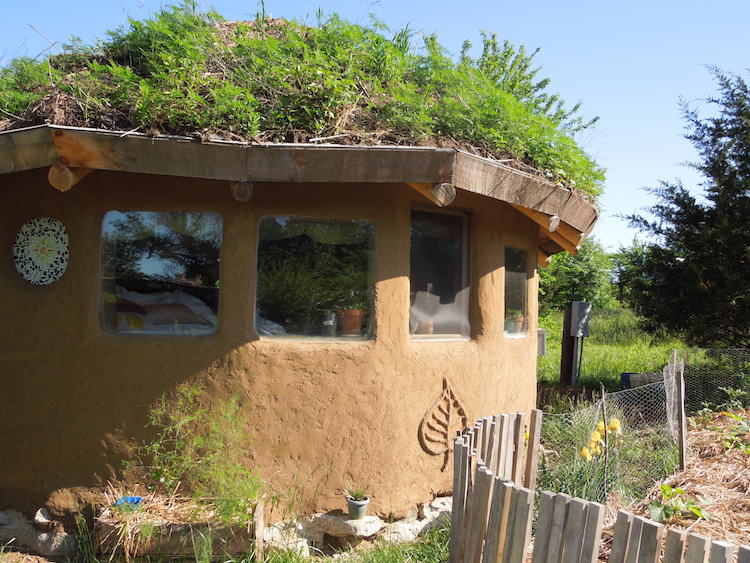
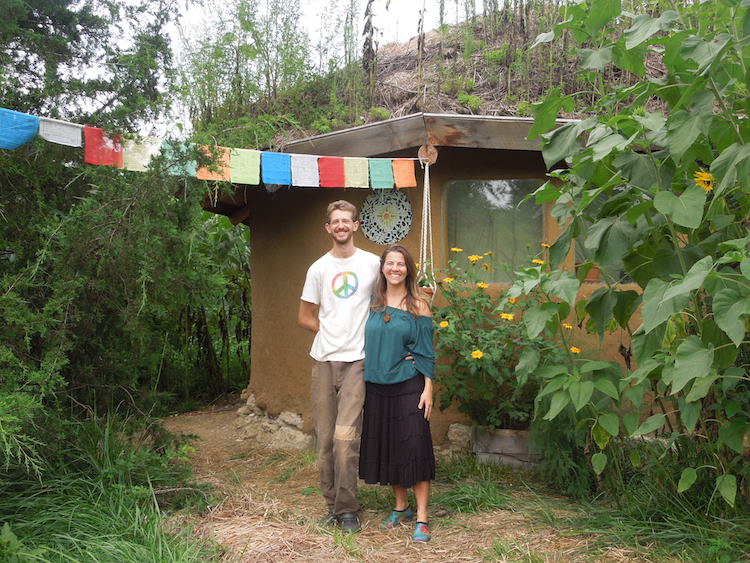
Hassan Hall, natural builder and self-styled woodsmith, combines permaculture principles with an ancient, artisanal approach in his ecologically sustainable homestead: the Hermitage.

Tucked away on the wild margins of Dancing Rabbit Eco-Village  amidst a riot of herbs and flowers, the Hermitage is a much beloved home and sanctuary for Hassan and his partner Danielle, a shamanic practitioner, while they prepare to have children and pursue their vision of right-living using the model of ecological sustainability. It is a testament to the potential of natural building technology, made entirely of recycled, upcycled and locally harvested materials.

Source: The Hermitage – Tiny House Blog


Self-Sustaining, Floating Island To Live Off The Grid

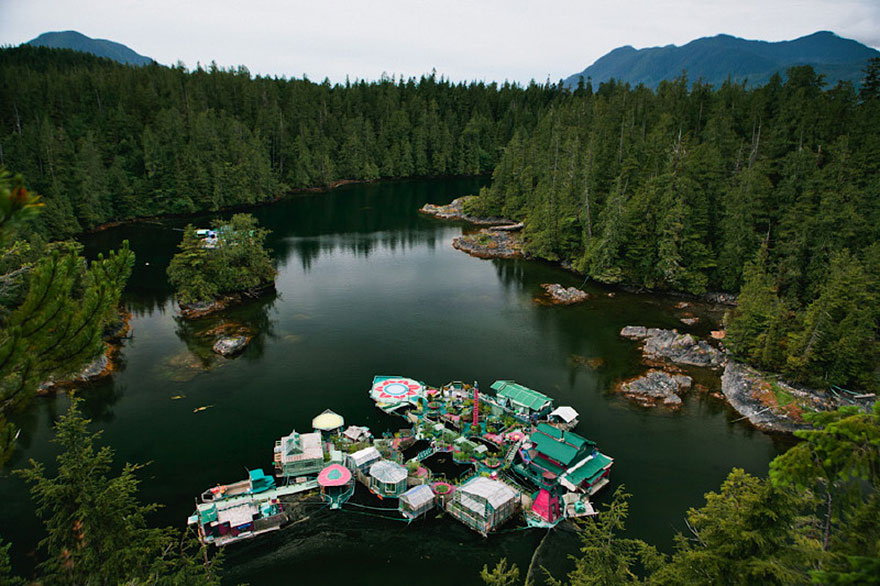
This floating fortress of sustainable living floating on the coast of Vancouver Island British Columbia goes to show just how wonderful a sustainable life off the grid can be. Wayne Adams, 66, and Catherine King, 59, built this floating home together in 1992, and have been growing and fishing for their own food ever since.

Source: Couple Spends 20 Years Building A Self-Sustaining, Floating Island To Live Off The Grid | Bored Panda


Camptime Coffee

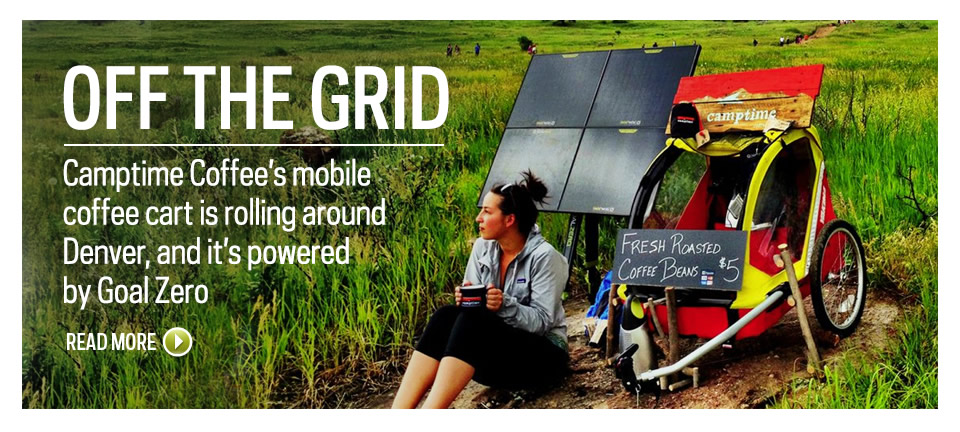
hpbanner_1coffee‘Coffee to go’ has a whole new meaning for JR Harrell and Natalie Taylor, founders of Camptime Coffee Company. You may see these guys rollin’ around Denver and the surrounding areas in their little coffee cart- completely powered by the sun.

Their coffee cart is 100% powered by Goal Zero. Their gear consists of 4 solar panels, the Escape 150, and 4 Guide 10 Plus battery packs which they use to light their cart, power their iPhones, iPads, and speakers. Behind the scenes founder JR is equipped with a Yeti 1250 Solar Generator in case of an emergency. He runs a design company as well (drawnn.com) that will now, just like the Camptime Coffee, never be powerless.

Learn more about Camptime Coffee Company:
facebook.com/camptimecoffee
camptimecoffee.com


Tiny House Gear | The Goal Zero Yeti

Tiny House Plans, Tiny Home plans, Tiny Homes, Tiny Houses, Tiny House Builder, Tiny Homes Builder, small houses, small house plans

A lot of folks never chose solar as an energy option because of the learning curve and difficulty in setting the entire system up. The Goal Zero Yeti 1250 solar generator makes getting on solar very simple. Unbox it, plug the solar panels into the generator, put them in the sun, and start gathering solar energy. Considering the small amount of energy needed to power up a tiny house, the Yeti 1250 system is an ideal choice to easily get off the grid.

The Goal Zero system is a solid and easy-to-use product. Find out more about it at Tiny House Gear.

goal-zero-yeti-1250-2