Earthy and warm, the inside of cob homes exude an incomparable charm.
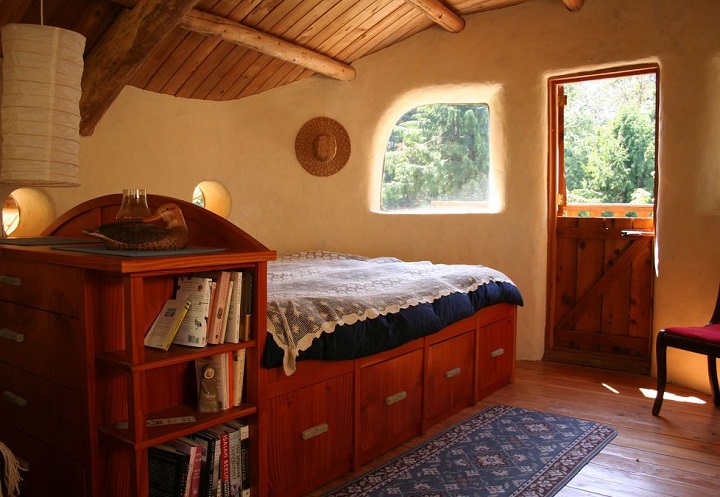
Source: Cob Interiors


Greywater is any household wastewater with the exception of wastewater from toilets, which is known as blackwater. Typically, 50-80% of household wastewater is greywater from kitchen sinks, dishwashers, bathroom sinks, tubs and showers. Of course, if you use a composting toilet, 100% of your household wastewater is greywater.
Freshly generated greywater is not as nasty as blackwater, but if it’s not handled properly it can soon become so. Greywater decomposes at a much faster rate than blackwater and if stored for as little as 24 hours, the bacteria in it use up all the oxygen and the greywater becomes anaerobic and turns septic. After this point it is more like blackwater – stinky and a health hazard. In fact, many jurisdictions have strict regulations about disposal of greywater, some even require it to be treated as blackwater.
Not all greywater is equally “grey”. Kitchen sink water laden with food solids and laundry water that has been used to wash diapers are more heavily contaminated than greywater from showers and bathroom sinks. Although greywater from these sources contains less pathogens than blackwater, many regulatory bodies consider it as blackwater.
The safest way to handle greywater is to introduce it directly to the biologically active topsoil layer, where soil bacteria can quickly break it down, rendering the nutrients available to plants. This biological water purification is much more effective than any engineered treatment, thus protecting the quality of groundwater and surface waters.
The information on this page is used with the kind permission of Art Ludwig. Art is an ecological systems designer who has done extensive work with greywater systems. For more information, please visit his websitewww.oasisdesign.net where you’ll find more than 300 pages of information about greywater, including greywater mistakes and preferred practices as well as the leading books on greywater.
Source: Greywater Recycling
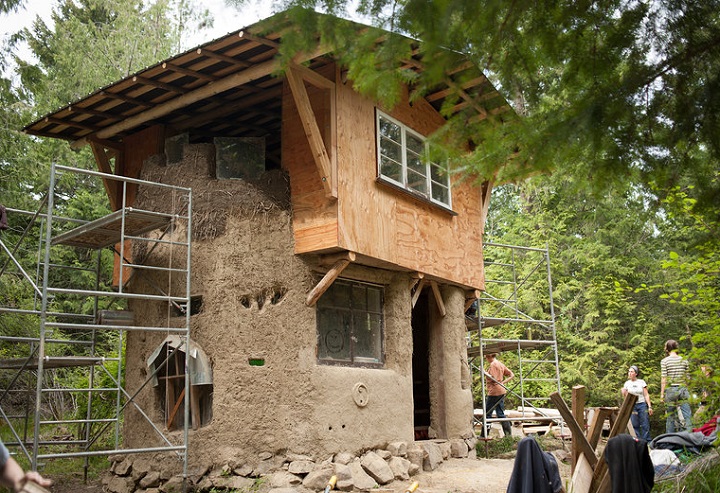
If you have a clay based subsoil (15-25% clay) you are in luck as your home’s raw material is below your feet. (You want the inorganic stuff down under the topsoil, no decomposing mulch and micro-organisms.) Mix your clay soil with some water, sand and straw. Mix with your feet, bare or booted, or with any number of mechanical mixers, or an oxen, or for a really large job, use a backhoe. See the ilovecob website for multiple mixing methods.
Cob Under Construction
Source: Cob Under Construction
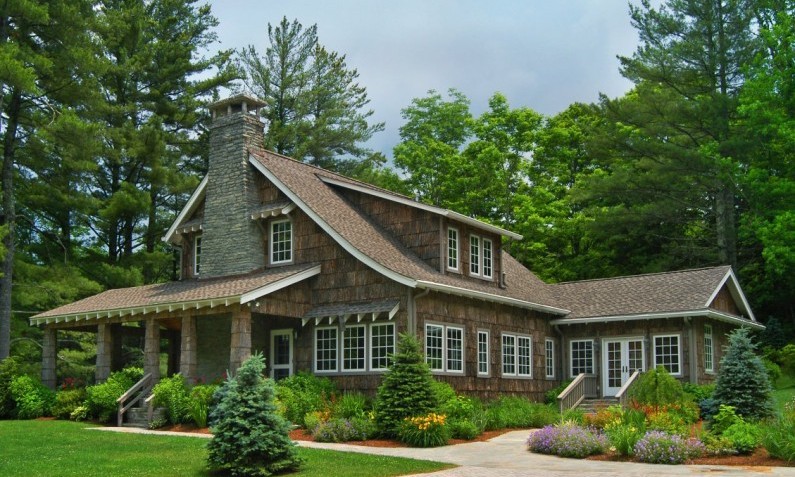
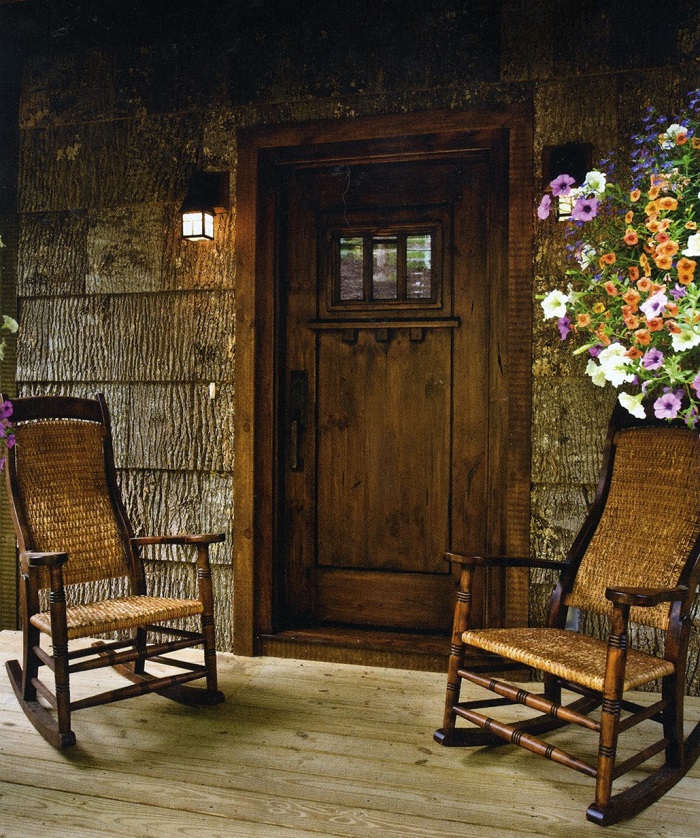 Bark Shingles was commonly used as home siding by the American Indians. Europeans arriving in America also found bark to be a useful siding. Chestnut siding was preferred until the chestnut blight killed the majority of chestnut trees. Now poplar bark is preferred. The bark is peeled from the felled tree and then flattened and kiln dried. The drying process kills all insects and makes the bark maintenance-free and impenetrable to future insect infestations. Bark siding has been known to last upwards of 80 years without need of sealant or stain. Poplar bark has an R-value of approx 3.7 and has excellent sound insulating qualities. Poplar wood is widely used in the furniture industry and utilizing the tree’s bark for siding means tree bark siding is a virtually zero waste product.
See much more about Bark: Bark Shingles

In the spring, a young man’s fancy lightly turns to thoughts of love, according to Tennyson. They also turn to that special grill that’s been out of use for most of the winter in much of the country. Whatever you prefer to throw on the barbecue, from steak to salmon to bananas (hey, we’ve seen it done), your mouth is sure to water at the sight of these amazing grill setups we found.

Read more: http://www.digitaltrends.com/home/20-incredible-grill-setups/#ixzz3Z2pH0uMg
Follow us: @digitaltrends on Twitter | digitaltrendsftw on Facebook
These incredible barbecue grill setups go way beyond just a single grill sitting next to the patio furniture.