Wall House | High Rent Tent

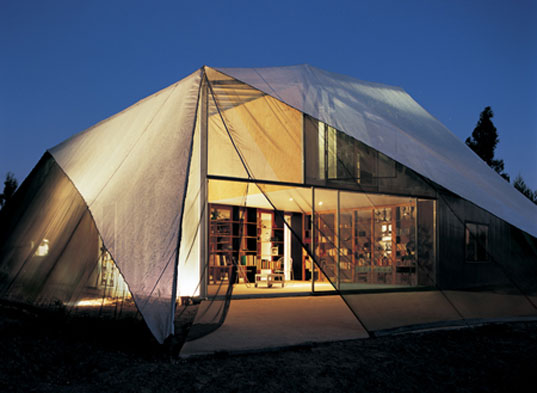
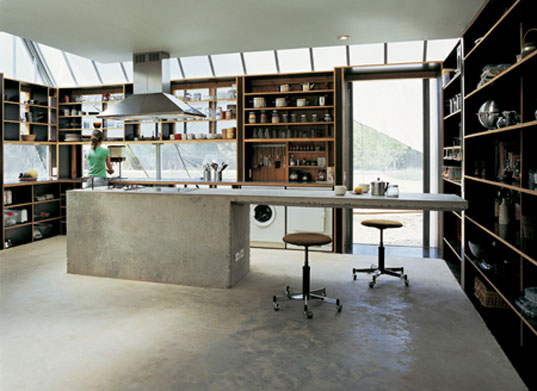
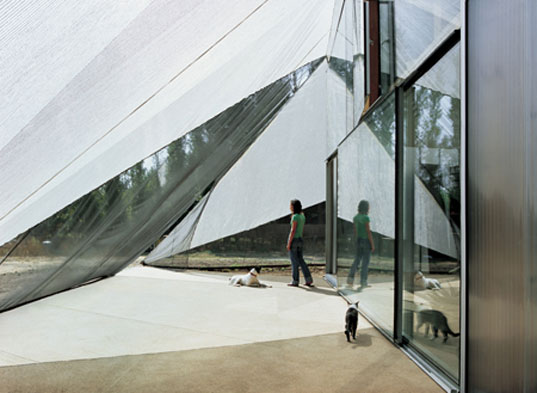
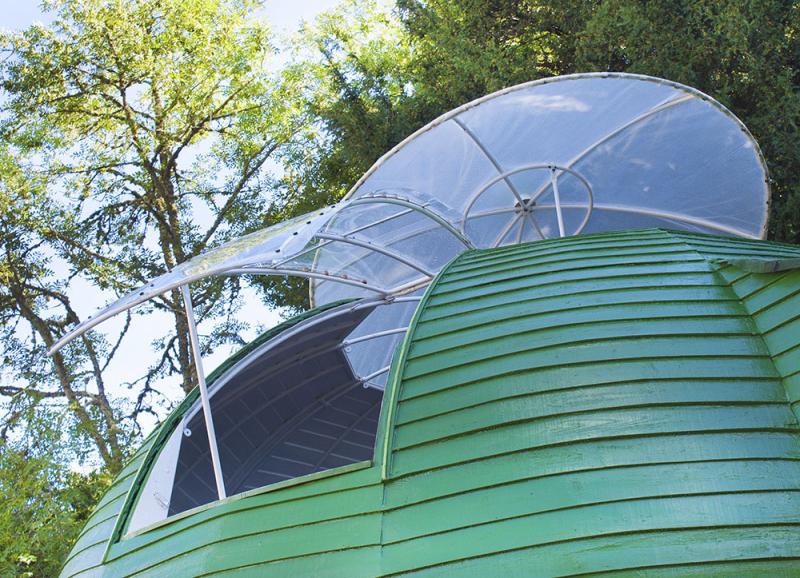
wallhouse3Merging green living, camping, and comfortable suburban residence, Frohn & Rojas’ Wall House in Santiago de Chile is a feat of both aesthetics and engineering. The small-scale home rejects traditional building approaches, providing an interesting take on the wall as a more qualitative and complex element, addressing our relationship with the outdoors, and inspiring social interactions within the home. Not to mention its super-cool and very high-tech “energy screen,” typically used in greenhouse construction, which yields diffused lighting and a regulated interior climate zone.

wallhouse4

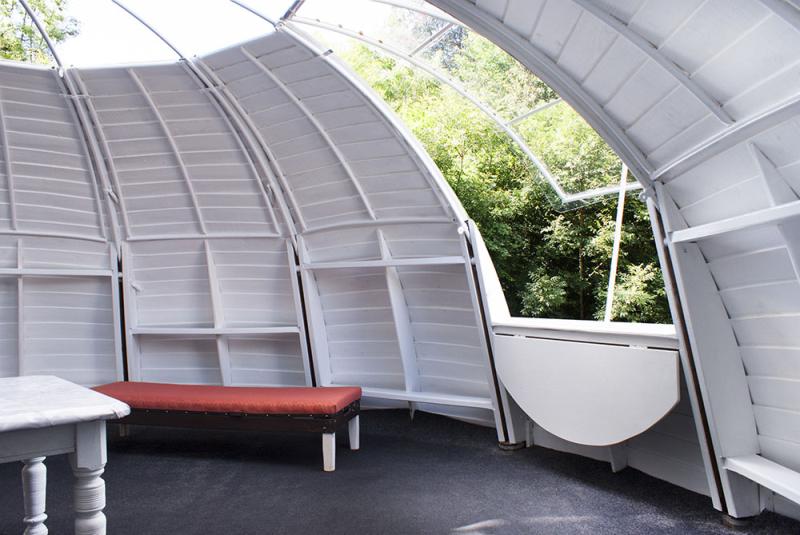
“The project breaks down the ‘traditional’ walls of a house into a series of four delaminated layers (concrete cave, stacked shelving, milky shell, soft skin) in between which the different spaces of the house slip.wallhouse6

From the inside out the layers build upon one another, both materially and geometrically, blurring the boundary between the interior and the exterior and creating, through the specificity of the different materials used (many of which are not common in architectural applications), a series of qualitatively distinct environments.” -Frohn & Rojas

wallhouse5

+ Frohn & Rojas

Via Dezeen


Read more: Frohn Rojas, Wall House, Tent house, green living, green house « Inhabitat – Sustainable Design Innovation, Eco Architecture, Green Building 


Brilliant Architectural Ideas, Brought to Life in a Low-Budget Orphanage –

It’s hard to get excited about an orphanage, but Norwegian social worker Ole-Jørgen Edna proves they don’t have to embody the scary stories of Dickens and Annie.Edna was 20 when he left home to visit a small village in Thailand before starting college. After seeing the devastation caused by a border conflict with Burma, and a staggering number of orphans, he scrapped his plan for school and decided to care for three orphaned children.
 
Over time, he took on more kids and during a brief visit home met with a fledgling architecture firm called TYIN Tegnestue. The architects jumped at the chance to design new homes for these displaced children.The original assignment was to build an orphanage, a traditional bunk house that could shelter his three children and others from surrounding areas. “As our orphanage has a Christian background they felt it would be like starting a new mission station, which they did not want to be a part of,” says Edna. Instead, they developed a concept that would meet the children’s needs while reflecting the designer’s aesthetic sensibilities.The result is six “Soe Ker Tie,” which translates to “butterfly houses.” Each is bright, constructed from bamboo and timber. Instead of stuffing everyone into a communal building, each small structure houses a few children. “They make up a nice community of houses where the children can have the privacy of their own house, yet still be a part of a bigger structure,” says Edna.

Instead of stuffing everyone into a communal building, each small structure can house a few children. Each building is a mix of advanced architectural thought and local construction expertise. The designers brought a modern sensibility with contemporary forms, spots of vibrant color, and soaring roof lines. They also had to adapt their Western training to work with local materials–concrete footings were cast inside old tires, and walls were woven from bamboo. There were no blueprints or CAD files; all the plans were sketched on whiteboards. Amazingly, the project was completed for just $11,000.


As you’d expect from novice designers, some changes were necessary upon completion. Floor-to-ceiling bunks gave way to a second floor that gave kids a place to store their personal possessions–while preventing kids from from rolling out of their beds. “It was kind of a dangerous way of sleeping as it was a steep drop if kids fell down, and there was not much done to prevent that from happening,” says Edna. “The younger kids also prefer to sleep closer together, which was a little difficult with the set up of the buildings.” The design team also spent time sprucing up the landscape surrounding the homes, crafting swings made from bamboo and rope and communal play areas.


Beyond the six buildings, the project yielded lasting benefits. Designers from TYIN Tegnestue have gone on to work on other projects in the developing world. Local builders gained experience with principles of architectural bracing and dealing with moisture. And Edna internalized the lessons and is applying them to his next building, a community center and school for these displaced children, which is currently being crowdfunded.

BY 

Clothesline Tiny Homes | Carrie and Shane

cropped-family-photo-exterior.jpg

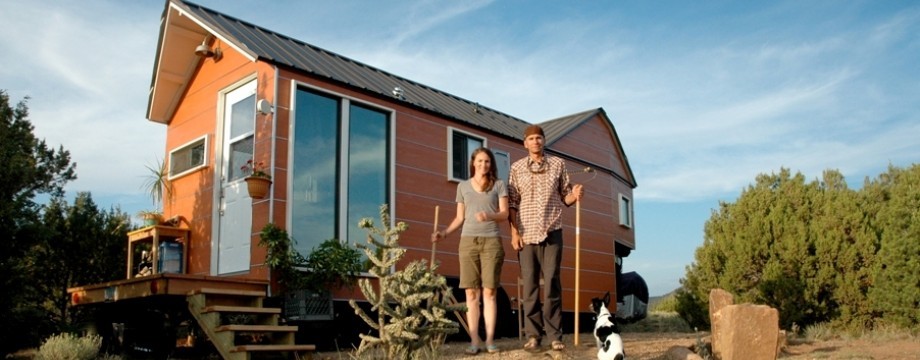
After being married for about a year, Carrie and Shane Caverly gave themselves the ultimate couple’s test. With her background in sustainable design and his in building green homes, the couple worked together to plan and build their own 200-square-foot tiny home on a flatbed trailer. And although it was challenging at times, the collaborative process was truly a bonding experience.
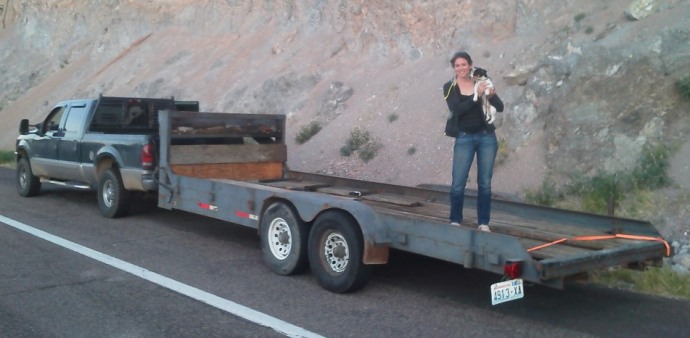
The couple started building in Prescott, AZ in February of 2012 and were able to move into their small house by the middle of May. In Mid-August, their desire to be closer to the Rocky Mountains brought them to a town 10 miles outside of Santa Fe, NM, where they now rent a portion of a larger property.
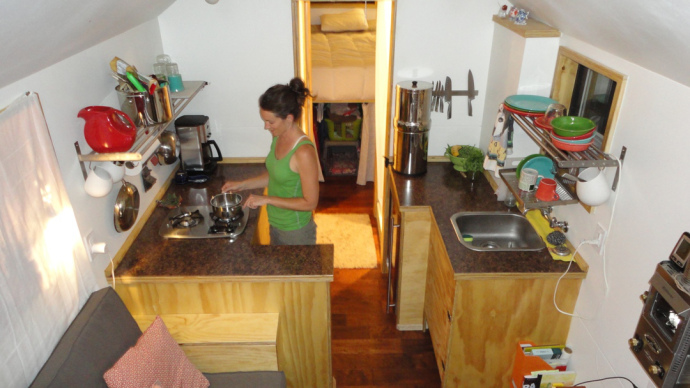
dsc01900


But before the big move, Carrie was teaching at a sustainable design school and Shane was building green homes (he still does), and lived in an average house that wasn’t sustainable and green. “So we decided we should start walking the talk,” Caverly says. And ultimately, the financial benefits were what finally pushed them to do it. “We just wanted to change our lifestyle so that we were living within our means,” Caverly says.

At first, she wasn’t a huge fan of the idea, Caverly admits. “We had just gotten married, and I thought it was a crazy idea for two people to live that close,” she says. “I was worried i wouldn’t have enough personal space and we would be way too on top of each other.” But all of her worrying ended up being for naught. Right now, he goes to work every day and she works from home, so they have a healthy amount of time away from each other.

To read more on Carrie and Shane’s story click on this link
 

Not So Tiny Teapot | United Kingdom

If you fancy something a little bit different then this fantastic and undoubtedly unique, multi-functional, two-story space could be just what you have been looking for and could be put to any number of uses.

The Magical Teapot would make a fabulous addition to any visitor attraction – as a feature for a children’s playground; as a quirky fishing hut; as a reception area/tea room/exhibition space etc; as a VIP lounge/viewing platform or press office at any outdoor event or simply the most enchanting “Hobbit Hideaway”.

One thing is for sure, it always makes folk smile, lifts their spirits – they just can’t help themselves!

The two story detached structure is 21 ft in diameter. Sold as seen for collection by purchaser. Supervised dismantling and re-erection service also available by separate negotiation.

The particulars from agents Rettie for the ‘detached house’ known as The Magical Teapot, at Lilliesleaf, Melrose in the Scottish Borders suggest that this two story property would also be ideal for a playground, fishing hut, tea room, VIP lounge or ‘Hobbit Hideaway’. It would, of course, make an ideal garden office too.